STUDIES (Vol.7, No.1, 2024):

Digital Identity Scale: A Validity and Reliability Study
ABSTRACT The purpose of this study is to develop a reliable and valid scale for measuring digital identity definitions, digital personalities, self-presentation strategies, communication styles in digital contexts, and digital identity perceptions of digital environment users over the age of 18. This study is significant since it is the first scale study on the subject……Continue reading→

Daily Internet Use and Its Association with Drug Behaviour in Adolescence
ABSTRACT The paper deals with the most widespread electronic medium among adolescents – theInternet. The main aim was to discover how young people spend their leisure time in theonline world, with a particular focus on the relationships and differences between Internetuse, particular activities, and legal drug use. The chosen quantitative research methodologywas applied through a……Continue reading→

Podcasts as an Attractive Educational Tool
ABSTRACT Media plays a key role in the learning process. Many listeners, viewers, readers, or visitors of online platforms look to the media as a source of new information to expand their knowledge. With a constantly changing lifestyle that keeps accelerating and putting ever higher demands on people to do several things at once, new……Continue reading→

The Effect of Animation as a Teaching Tool on Students’ Learning – an Experimental Study
ABSTRACT This study aims to explore the effect of animation on students’ learning process and compare the learning outcomes between animation-based and traditional teaching methods. The research questions hypothesize that animation enhances the learning process, attention, retention, reproduction and motivation in students. This study employed quantitative methodology by using an experiment involving two separate groups:……Continue reading→

The Environmental, Social and Economic Pillar Of Socially Responsible Marketing as a Necessary Condition for Increasing the Competitiveness of Medium-Sized Enterprises in Selected Regions of Slovakia in the Context of Used Media
ABSTRACT Corporate social responsibility is one of the most crucial management concepts for companies to integrate into their processes. It is gradually expanding into marketing, in the specific form of socially responsible marketing. As practice illustrates, this concept represents a competitive advantage for businesses that have decided on its application. This step allows them to……Continue reading→

Navigating the Digital Landscape: Impact of Instagram Influencers’ Credibility on Consumer Behaviour Among Gen Z and Millennials
ABSTRACT Amidst the online advertising revolution, Instagram influencers have risen to power, exercising remarkable authority in shaping consumer behaviour in the digital media landscape. This article aims to provide an impact of Instagram influencers’ credibility on three different forms of consumer behaviour i.e., purchase intention, purchase decision process, and impulse buying. The investigation extends to……Continue reading→

From the Classroom to the Newsroom: Evaluating the Impact of Media Practice on Digital Competence in Higher Education
ABSTRACT Digital literacy and related digital competences are now an integral part of media work. Changesin technology and audience consumption habits have forced media professionals to acquire awide range of digital skills. These include not only technical skills, such as mastery of digital toolsand platforms, but also the ability to communicate and present content effectively……Continue reading→

Main Issues of Implementing Media and Information Literacy in School Education in Central Asian Countries (The Case of Kazakhstan, Kyrgyzstan, and Uzbekistan)
ABSTRACT In today’s interconnected world, implementing media and information literacy (MIL) into school education is essential to equip students with the critical skills needed to navigate an increasingly complex information landscape and discern between credible sources and misinformation. By fostering a generation of media-literate individuals, students can be empowered to become responsible consumers, creators, and……Continue reading→

Media Literacy In Higher Education: “Know-Where” and “Know-Whether”… Know-Why to Know Better?
ABSTRACT With the objectives of the Grünwald Declaration (1983), the Alexandria Proclamation (2006), the UNESCO Paris Agenda (2007) and the concept of media literacy (alias understanding and using mass media in either an assertive or non-assertive way, including an informed and critical understanding of media, the techniques they employ and their effects) on mind, it……Continue reading→

Investigating the Effect of the Media Literacy Family Education Program on the Media Literacy Levels of 48-60-Month-Old Children and Their Mothers
ABSTRACT The research aimed to examine the effect of the media literacy family education program on the media literacy levels of 48-60-month-old children and their mothers. The research was conducted as distance education with 48-60-month-old children and their mothers attending independent kindergartens affiliated with the Çankırı Provincial Directorate of National Education during the 2019-2020 academic……Continue reading→
Download the FULL JOURNAL HERE (VOL.7, No.1, 2024)
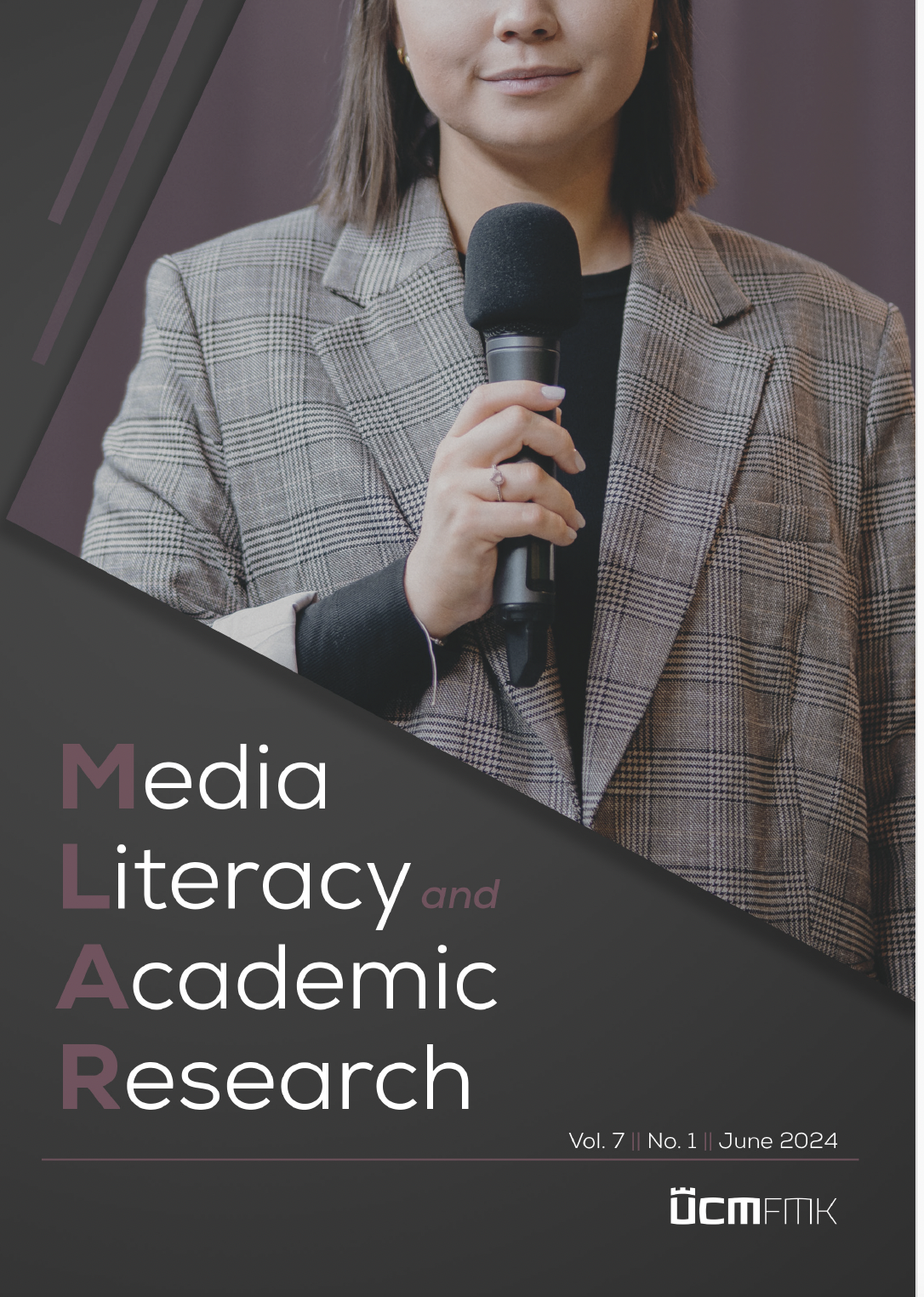
Media Literacy and Academic Research
Vol. 7, No. 1, May 2024
ISSN: 2585-9188
EV/25/22/EPP
mlar@ucm.sk
Publisher
Faculty of Mass Media Communication
University of SS.Cyril and Methodius in Trnava
Námestie Jozefa Herdu 2
917 01 Trnava
SLOVAK REPUBLIC
https://fmk.sk/en/