STUDIES (Vol.7, No.2, 2024):

Slovak Mimicry of Online Content Moderation on Digital Platforms as a Result of the Adoption of the European Digital Services Act
ABSTRACT The global nature of digital platforms, particularly social media, highlights the lack of a unified legal framework to regulate the content which is distributed to users. This issue is not only about the quality of the content but often concerns its problematic nature, which may conflict with the legal systems of various countries, especially……Continue reading→

The Role of Blended Learning International Cooperation in Increasing Students’ Employability
ABSTRACT The swift evolution of education, catalyzed by the global pandemic, has driven the infusion of advanced technologies into higher education. As student expectations evolve amid global trends and digital transformation, a paradigm shift in pedagogical strategies is underway. This paper explores the realm of international business education and investigates the influence of Blended Learning……Continue reading→

Counter-Discourses in Political Economy in/through Media Literacy Education
ABSTRACT For this critical inquiry, the overarching goal is framed along the pedagogical imperative of surfacing the counterpoints and countercurrents in the rendering and representation of development discourses in the textbook task section of media and information literacy instructional materials. In making perceptive sense of this type of didactic media, the researcher worked on the……Continue reading→

How Does the Media Communicate Information about Climate Change? Analysis of Slovak Mainstream Media in 2019-2024
ABSTRACT Climate change is one of the biggest global issues and challenges facing society today. The media reflect this topic in their content, but it often fades into the background in terms of the importance of other events. However, the diversity of this topic does not stop at the issue of waste management or waste……Continue reading→

Creating Family and Community Film Testimonies: Empathetic Listening as a Learning Tool
ABSTRACT This study examines the production of film testimonies as part of an academic course and how this structured educational process develops transformative competencies in learners. The semester-long course involves students from a variety of disciplines and backgrounds, drawn from all segments of the Israeli and Palestinian communities. Students study and experience the theoretical, pedagogical,……Continue reading→

What Young People Know and ThinkThey Know about Politics: Factors Influencing Political Knowledge among Romanian First-Time Voters
ABSTRACT As they approach voting age, young people aged 17 to 19 years old are at a significant turning point in their political development. In this formative stage, their perceptions and understanding of the political landscape depend, among other things, on the diversity of information sources and content to which they are exposed to on……Continue reading→
Download the FULL JOURNAL HERE (VOL.7, No.2, 2024)
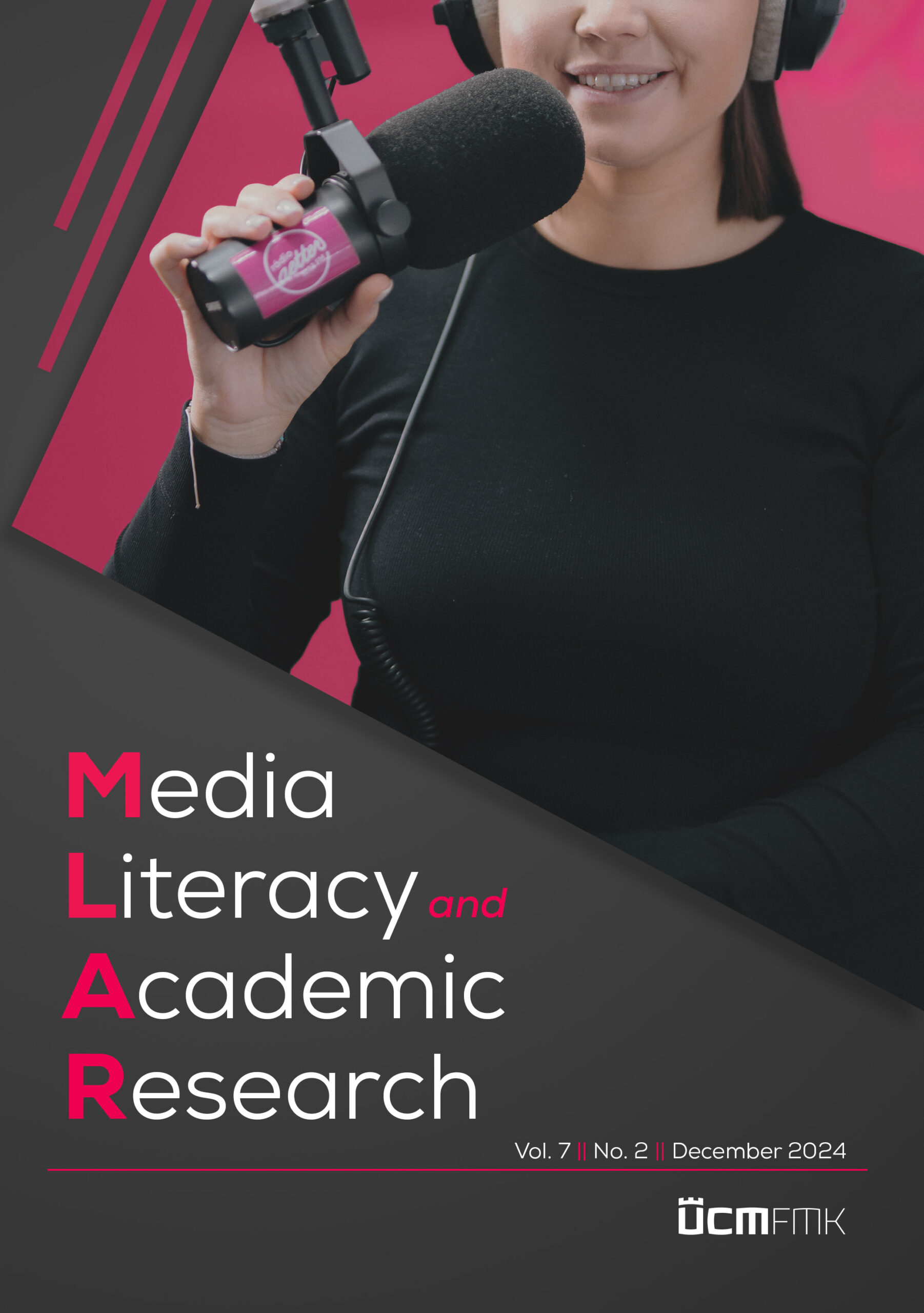
Media Literacy and Academic Research
Vol. 7, No. 1, December 2024
ISSN: 2585-9188
EV/25/22/EPP
mlar@ucm.sk
Publisher
Faculty of Mass Media Communication
University of SS.Cyril and Methodius in Trnava
Námestie Jozefa Herdu 2
917 01 Trnava
SLOVAK REPUBLIC
https://fmk.sk/en/